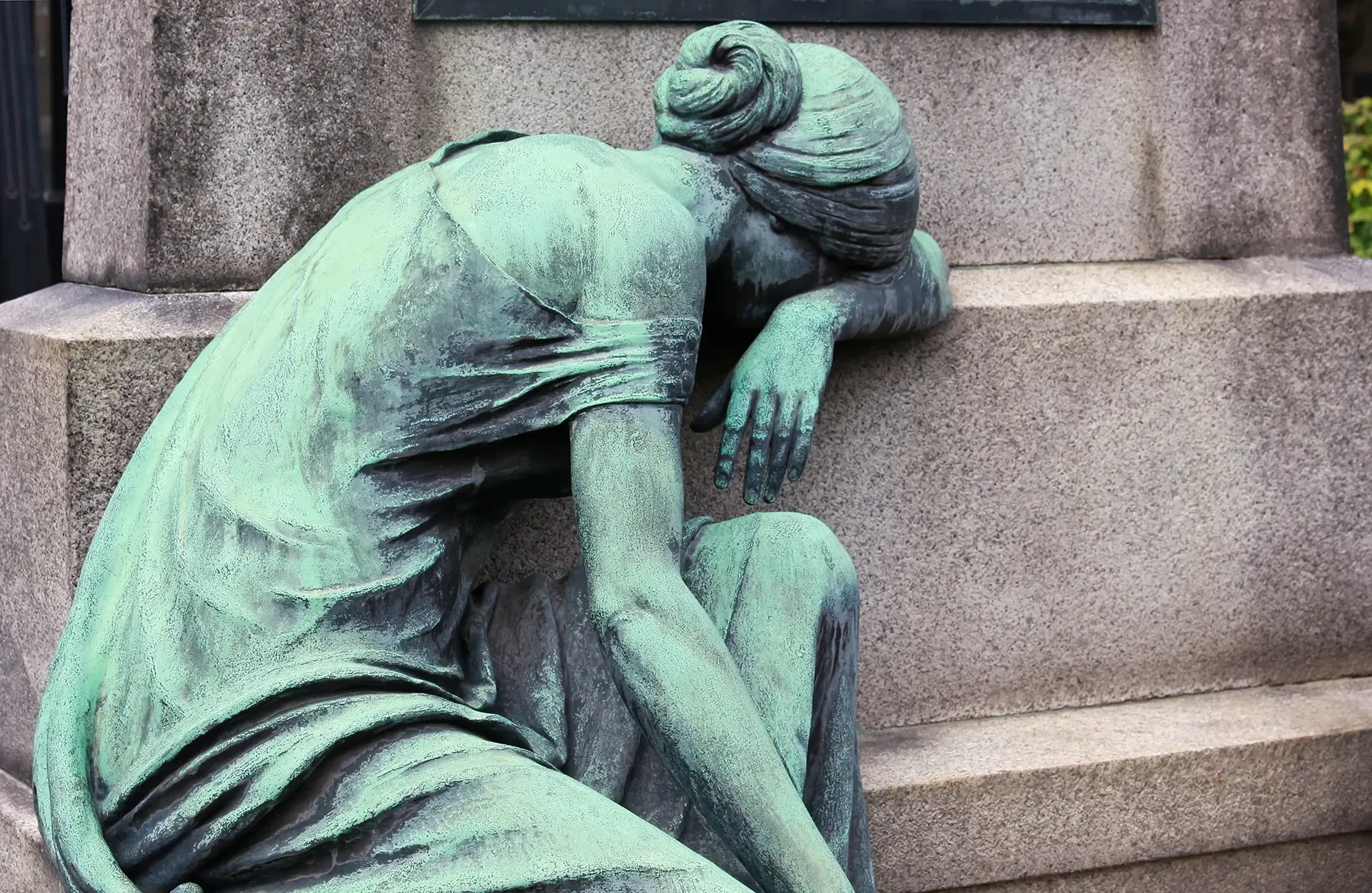
Tisha B’Av – A Time to Mourn
Persons of non-Jewish heritage might not understand the words Tisha B’Av in Hebrew – which simply mean the ninth day of the Jewish month of Av. But everyone understands and can relate to grief, mourning and sadness over tragedies – in our own lives and the lives of others, perhaps far as well as near.
We have had plenty to lament in recent weeks and months.
Within the last month alone, those who watch, read or hear news have ridden the rollercoaster of murders and natural disasters. Flash floods swamping Texas Hill Country ruined the July Fourth weekend, killing more than 100 with dozens missing for days upon days. Children, youth, adults and pets perished. A youth camp was washed away, along with nearly 30 children and staff.
This week, a 27-year-old suicidal former football player who suffered from chronic traumatic encephalopathy from his days as a player opened fire in a Park Avenue, Manhattan, with a semiautomatic rifle, killing four people and injuring one. His target: the NFL offices. People with no connection to the NFL died.
And on July 29, 49 Christians, including children, were hacked to death as they prayed for peace in a night prayer vigil at a church in Komanda, Democratic Republic of Congo. This was just one tragedy in a string of mass murders by Islamist terrorists in Nigeria and the DRC.
Lament is a natural response to tragedy or simply life’s recurrent trials and difficulties. Research has shown that God created each of us with tears for specific purposes. When we are angry, our tears have a certain chemical makeup. When we are happy, another chemistry. When we are sad, like the “weeping prophet” Jeremiah, our tears have other unique chemical properties.
Starting today at sunset is what the Jewish community has long marked as Tisha B’Av, a communal day of mourning. Originally, the day – and actually several weeks before it – was placed on the Jewish calendar to lament the destruction of the First and Second Temples in Jerusalem in 586 B.C. and 70 A.D., as Jesus predicted. Since then, Tisha B’Av has become a day and time to fast and mourn the many disasters that have befallen the Jewish people on this day and others.
On the eve of the ninth day of Av, they read Psalm 137, a psalm of longing for their home Jerusalem (after being whisked away hundreds of miles to pagan Babylon):
By the rivers of Babylon, there we sat down, yea, we wept, when we remembered Zion. We hanged our harps upon the willows in the midst thereof. For there they that carried us away captive required of us a song; and they that wasted us required of us mirth, saying, Sing us one of the songs of Zion. How shall we sing the Lord’s song in a strange land? If I forget thee, O Jerusalem, let my right hand forget her cunning. If I do not remember thee, let my tongue cleave to the roof of my mouth; if I prefer not Jerusalem above my chief joy.
There have always been tragedies, horrors in this fallen world, from the fall in the Garden and the murder of Abel by his brother Cain. Kings, dictators and presidents have been assassinated. Plagues and pandemics have killed loved ones by the thousands. Brutal and unfathomable genocide has left just a remnant of ethnic groups to limpingly repopulate – and the Bible says this will happen in the very last days of Satan’s reign on the “old” Earth.
We must not forget those who have suffered and been displaced and martyred – very intentionally and shockingly, very sadly. Jeremiah and Jesus, among many others, remind us that “lamentation” is healing and human.
The phrase after America’s September 11, 2001, tragedy was “Never forget.” And we won’t.
But Jesus also reminds us we can remember, but after our lamenting is over, or perhaps before it is over and we are still hurting, we must forgive.
– We must forgive the person who murdered those 20 beautiful children and devoted six teachers and staff members at Sandy Hook Elementary, Newtown, Conn.
– We must forgive the Oklahoma City bomber.
– We must forgive the Son of Sam and the Manson Family murderers.
– We must forgive our family members who have hurt or disappointed us.
– We must forgive our church members or leaders who have sinned or turned their backs on us.
God created us in His image. We are human, but we are knit together by a Divine hand – and every human is deeply loved by their Creator.
Poet Alexander Pope wisely wrote: “To err is human; to forgive, divine.”
AND, bottom line: Jesus told us to.
From the Sermon on the Mount:
“For if you forgive other people when they sin against you, your heavenly Father will also forgive you. But if you do not forgive others their sins, your Father will not forgive your sins.” —Matthew 6:14-15
In the remembrance, in the lamenting, in our deep sorrow and in the divine forgiving, we need only look to and speak to our heavenly Father and His Son and recall what they have forgiven us for. Praise God from whom all blessings flow. Share that blessing of grace-filled forgiveness and keep the outpouring of Living Water flowing, through us and to others who are also hurting and need His Divine touch.